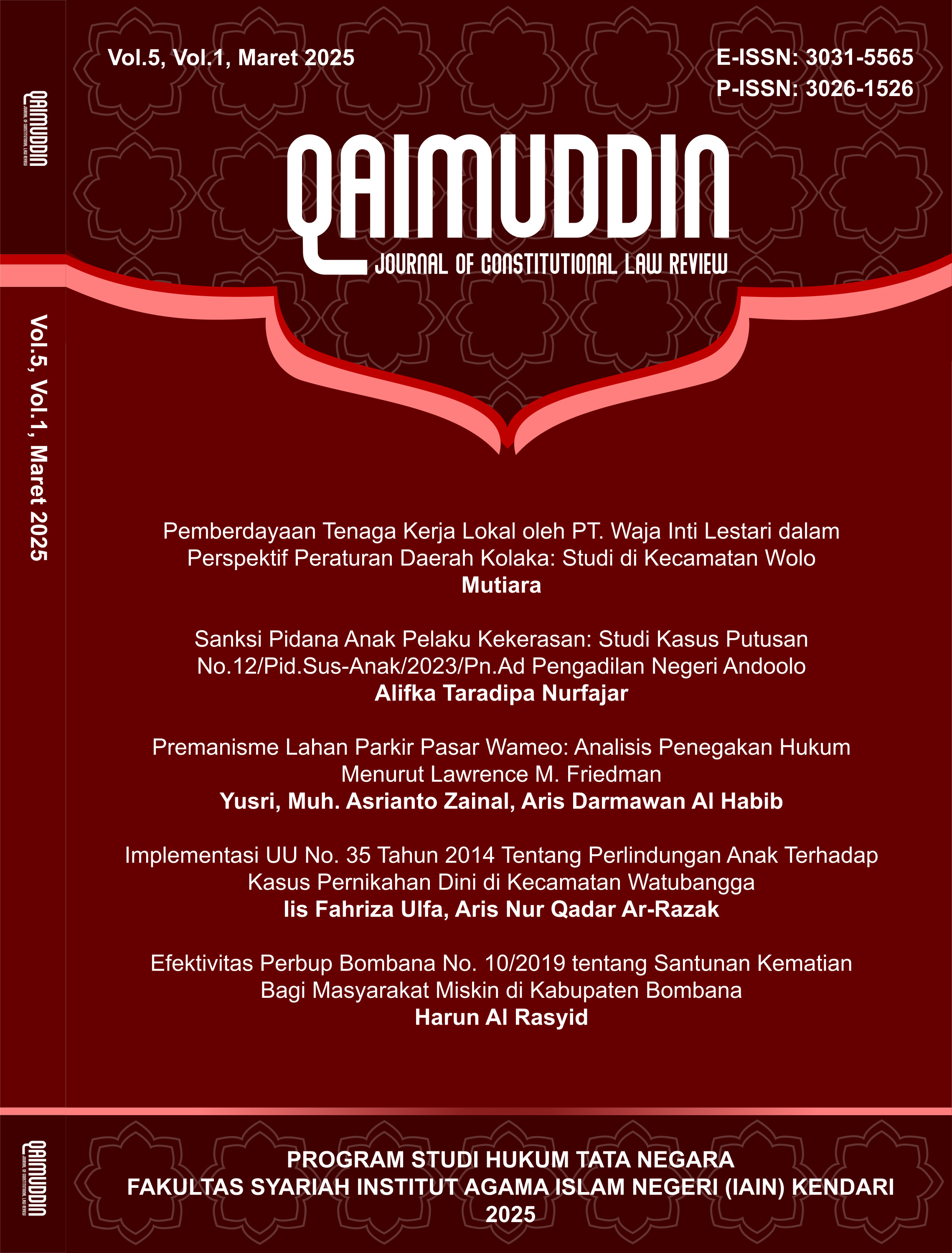
Sanksi Pidana Anak Pelaku Kekerasan: Studi Kasus Putusan No. 12/Pid.Sus-Anak/2023/Pn.Ad Pengadilan Negeri Andoolo
DOI:
https://doi.org/10.31332/qjclr.v5i1.9538Keywords:
Criminal Sanctions, Children, Violence, LawAbstract
The purpose of this research is to describe the imposition of criminal sanctions on violent children in Andoolo District Court, analyze the problems of imposing criminal sanctions on violent children in Law No.35 of 2014, and outline the concept of imposing criminal sanctions on violent children in the future. The problem in this study is the imposition of criminal sanctions that are not in accordance between the Law and the Court Decision where the sentence imposed on the perpetrator is below the provisions of the Child Protection Law. This type of research is descriptive qualitative research with normative judicial research typology. This research is conducted with a statutory approach, case approach, comparative approach and conceptual approach. The materials used in this research are primary legal materials (laws and regulations) and secondary legal materials (books, theses, and journals). The results of this study indicate that judges have the freedom to give decisions, but judges who give decisions below the minimum threat of punishment specified in the law as in the Andoolo District Court Decision Number 12/Pid.Sus-Anak/2023/Pn.Adl are deemed inappropriate because the punishment imposed on the defendant is considered too light and not proportional to the actions he committed. Based on Article 81 paragraph (1) of Law No.35 of 2014 concerning Child Protection, that the perpetrators of child abuse both by children as perpetrators and by adults are applicable with a minimum penalty of 5 (five) years. Based on the principle of protection of children and the objectives of law enforcement in the form of the principles of legal certainty, justice and expediency, the judge can impose a sentence under the threat of a special minimum sentence in the crime of harassment, the judge has taken a new breakthrough in the best interests of the child and justice for the child perpetrator and victim.
Keywords: Criminal Sanctions, Children, Violence, Law
References
Bungin, B. (2007). Analisis Data Penelitian Kualitatif. Jakarta: Raja Grafindo Persada
Hidayat, Maono. (2016). Penerapan Ancaman Minimal Dalam Putusan Hakim
Imam, Subaweh. A (2021). Konsep Doli In Capax Terhadap Anak Yang Berhadapan Dengan Hukum Di Masa Depan, Jurnal Pembangunan Hukum Indonesia
Latif, M Arham,2017, Analisis Putusan Hakim Terhadap Anak Pelaku Tindak Pidana Kejahatan Seksusal, UIN Alaudin Makasar
Masu, Reny R, 2019 Keadilan Restoratif dalam pembinaan Anak yang Melakukan Tindak Pidana Terorisme, Universitas Airlangga.
Mulyadi, Lilik. (2017). Hukum Acara Pidana. Bandung: Citra Aditya Bakti
Salam, F.M. (2005). Hukum Acara Perlindungan Anak Di Indonesia. Bandung: Mandar Maju
Saraswati, Rika, 2015 Hukum Perlindungan Anak,Bandung;Pt Citra Aditya Bakthi.
Soekanto, S & Manuji, S. (2013). Penelitian Hukum Normatif: Suatu Tinjauan Singkat. Jakarta: Raja Grafindo Persada
Sambaditya, Abdurahim, 2017 Sanksi Pidana Anak Sebagai Pengendara Kendaraan Bermotor Yang Menyebabkan Kematian seseorang, Universitas Atma Jaya Yogyakarta.
Suyanto, Bagong,2010, Masalah Sosial Anak,Jakarta;Kencana.
Undang-Undang Nomor 35 Tahun 2014 tentang Perlindungan Anak (2014)